Comparisons
Multi-Mushroom Formulas vs Omega-3, CoQ10 and Plant Sterols
These categories do different jobs. Plant sterols have the clearest LDL-lowering evidence; omega-3s relate mainly to triglycerides with mixed outcome data; CoQ10 is studied largely for statin-related muscle symptoms, not cholesterol; and multi-mushroom blends have the weakest cardiovascular evidence and the least transparent labels. No single category wins for everyone, and none replaces medical treatment.
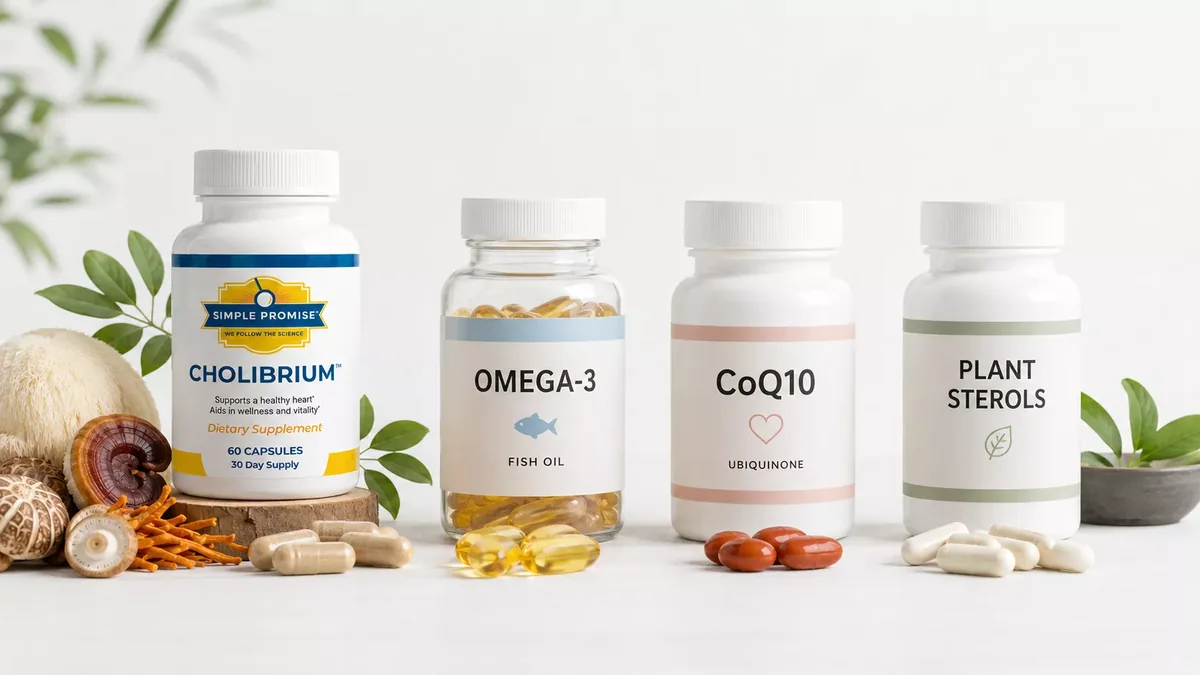
Four categories, four different jobs
These products share a shelf and a marketing theme, but they are not competitors doing the same job. Comparing them fairly means asking what each is actually intended to do, then asking how well the evidence supports it. There is no universal winner here, and any page that names one is selling rather than comparing.
Plant sterols and stanols
These plant compounds reduce how much cholesterol the gut absorbs, and they have the clearest cholesterol-lowering evidence of the four Systematic review. Guidelines generally reference intakes around 2 grams a day, with LDL reductions in the region of 10% when combined with dietary change [2]. The NIH’s complementary-health center notes that stanol and sterol supplements taken with meals can reduce cholesterol levels, though evidence for foods carrying them is more extensive than for capsules [1]. Worth knowing: reducing LDL is not automatically the same as reducing heart attacks, and long-term outcome trials for sterols are lacking [2].
Omega-3 fatty acids
Omega-3s are studied mainly for triglycerides rather than LDL, and high-dose prescription formulations are a different proposition from over-the-counter fish oil. Evidence that ordinary fish-oil supplements prevent cardiovascular events has been mixed and is a subject of ongoing debate. They also carry a practical caution: fish oil can affect bleeding, which matters before surgery or alongside blood thinners.
CoQ10
CoQ10 is not primarily a cholesterol product at all. Most interest concerns whether it eases muscle symptoms in people taking statins, and trial results there have been inconsistent. It is not established as a cholesterol-lowering agent, so judging it on LDL misses its actual claim.
Multi-mushroom formulas
Mushroom blends are the newest and least-supported category for heart markers. The relevant compound is beta-glucan, a soluble fiber with genuine cholesterol research behind it — but the persuasive human trials used oat and barley beta-glucan at gram-level doses, not mushrooms [3]. Trials of medicinal mushrooms themselves, such as the Cochrane review of reishi, have generally not shown meaningful effects on cholesterol, blood pressure or blood sugar [4].
| Plant sterols | Omega-3 | CoQ10 | Multi-mushroom blends | |
|---|---|---|---|---|
| Typical intended use | Lower LDL absorption | Lower triglycerides | Statin-related muscle symptoms | General “heart support” |
| Evidence strength (for its own claim) | Strongest of the four for LDL | Mixed; stronger for triglycerides | Inconsistent | Weak or absent |
| Ingredient transparency | Usually a stated dose | EPA/DHA usually listed | Dose usually listed | Often a proprietary blend |
| Main safety considerations | Generally well tolerated | Bleeding risk; surgery | Interactions possible | Digestive effects; allergies; bleeding |
| Medication interactions | Discuss with clinician | Blood thinners | May interact with warfarin | Discuss with clinician |
| Cost comparability | Cost per gram calculable | Cost per EPA/DHA mg calculable | Cost per mg calculable | Often incalculable (blend) |
Transparency is where blends lose ground
Notice the last two rows. With sterols, omega-3s and CoQ10, you can usually see the dose, compare it with the research, and work out what you are paying per unit of active ingredient. With a proprietary mushroom blend you frequently cannot do any of those things. That is not a claim that blends are worthless — it is a statement about what you are able to verify, which is a legitimate factor when deciding where your money goes.
Cholibrium sits in this last group: ten named species, undisclosed individual amounts. The manufacturer publishes its own comparison of Cholibrium with other supplement categories, which is worth reading as the seller’s perspective and weighing against the independent picture above. Our ingredients article goes through what its label does and doesn’t disclose.
Findings concerning individual ingredients cannot automatically establish the effectiveness of the complete Cholibrium formula. Product-specific human research would be needed to determine how the finished combination performs.
Who should get medical advice first
Some situations move this from a shopping decision to a medical one. Get professional advice before using any of these categories if you take prescription medication (especially blood thinners or diabetes drugs), have a diagnosed cardiovascular condition, are pregnant or breastfeeding, have kidney or liver concerns, or have surgery scheduled. None of these products is a substitute for treatment of a diagnosed condition — see supplements versus statins for why that distinction matters.
Limitations of this comparison
Evidence strength is summarized in broad terms here; individual products within a category vary in dose, quality and form, and a category-level judgment cannot predict what any specific bottle will do for any specific person. Lowering a marker such as LDL is also not the same as preventing heart attacks, and for several of these categories the long-term outcome data are limited. Research continues, and conclusions can change.
What to do next
Start from the goal rather than the product. If LDL is the target, the category with the most supportive evidence is plant sterols — and the treatment with by far the strongest evidence is not a supplement at all. If triglycerides are the concern, omega-3 is the relevant conversation. If you are simply curious about mushrooms, that is fine — just hold expectations loosely, because the evidence does not currently support strong claims. Whatever you choose, check the label properly using our label guide and run the numbers with our price comparison guide.