Comparisons
Dietary Supplements vs Statins: Evidence, Regulation and Important Differences
Do not stop, reduce or replace prescribed cholesterol medication because of information on this website. Speak to the healthcare professional responsible for your treatment before changing medication or adding a dietary supplement.
Statins are prescription medicines proven to regulators to be safe and effective, with strong trial evidence that lowering LDL cholesterol reduces cardiovascular events. Dietary supplements are not approved for safety or effectiveness before sale, and trials of common supplements have generally not shown meaningful LDL reductions. They are not interchangeable, and no supplement is an approved treatment for high cholesterol.
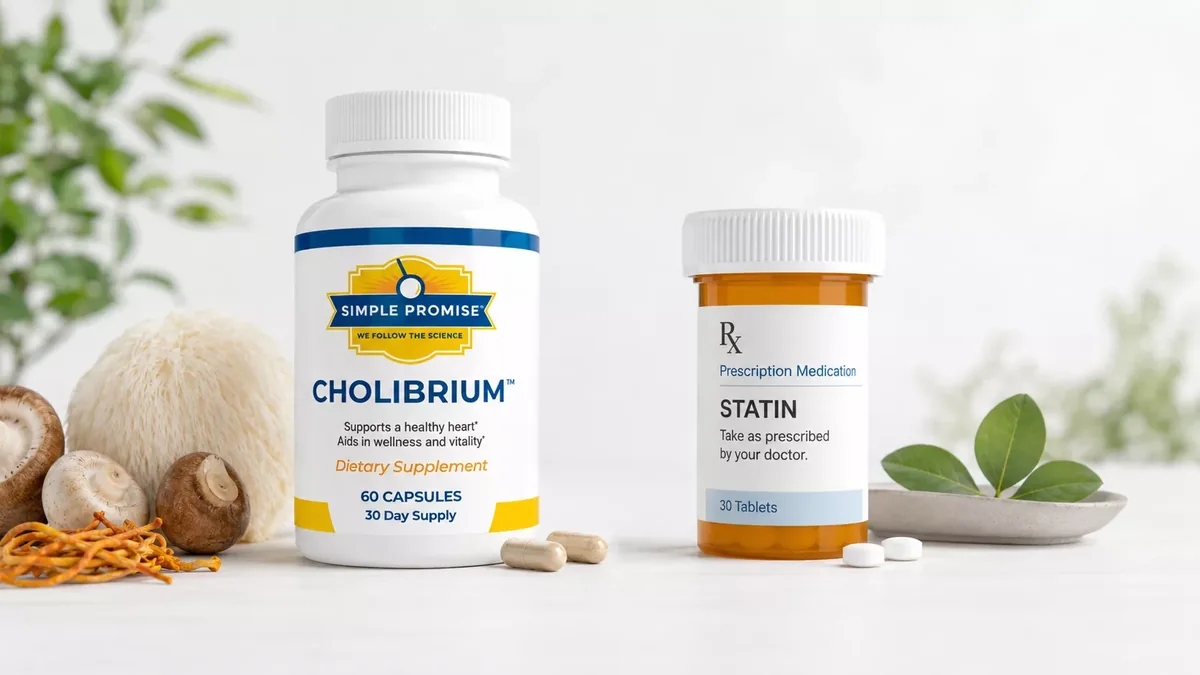
They are not two versions of the same thing
A statin and a supplement can look like competing options on a shelf. Legally, scientifically and practically, they are different categories of product, and the differences are not cosmetic.
A statin is a prescription medicine. Before it can be sold, its manufacturer must demonstrate to regulators that it is safe and effective for a defined medical use, in human trials. A dietary supplement faces no such requirement. Under U.S. law the FDA does not approve dietary supplements for safety or effectiveness before they are marketed, and in many cases a company can bring a product to market without notifying the agency at all [1]. Responsibility for substantiating claims rests with the company selling the product.
That single regulatory fact explains most of what follows. It is also why no dietary supplement — Cholibrium included — is an FDA-approved treatment for high cholesterol, and why the phrase “FDA approved” should never appear next to a supplement.
The evidence gap is large, not marginal
Statins are among the most extensively studied medicines in existence. Pooled analyses of randomized trials indicate that lowering LDL cholesterol by about 1 mmol/L with a statin is associated with roughly a 10% reduction in all-cause mortality and about a 22% reduction in major cardiovascular events over the trial periods studied Meta-analysis of RCTs [4]. That is why current cholesterol guidelines place statin therapy at the foundation of lipid lowering when medication is indicated [3], and why clinicians recommend them for defined risk groups [2].
Supplements have nothing comparable. A 2023 randomized trial compared six common supplements with a low-dose statin and a placebo; none of the supplements produced a significant reduction in LDL cholesterol compared with placebo, while the statin did Randomized trial [5]. For medicinal mushrooms specifically, a Cochrane systematic review of reishi found the available trials did not support a meaningful effect on cholesterol, blood pressure or blood sugar [6]. This is not a case of two options with different amounts of evidence. It is one option with strong evidence for reducing cardiovascular events, and another with little or none.
| Prescribed statin | Dietary supplement | |
|---|---|---|
| Pre-market approval | Required: safety and effectiveness proven to regulators | Not required; FDA does not approve before sale |
| Evidence for lowering LDL | Strong, from large randomized trials | Varies; often weak, absent or null |
| Evidence for reducing heart attacks/strokes | Established in major trials | Not established |
| Dose | Prescribed and adjusted by a clinician | Chosen by the manufacturer; often undisclosed in blends |
| Monitoring | Lipid panel and clinical follow-up | Usually none |
| Purpose | Treating a diagnosed condition | Supplementing the diet — not a treatment |
Supplements are not replacements for statins
This deserves to be said without hedging. If a clinician has prescribed a statin, that decision was based on your measured cholesterol and your overall cardiovascular risk. Swapping it for a supplement means giving up a therapy with demonstrated benefit in exchange for one that has not shown the same effect — while your underlying risk continues unchanged. High cholesterol usually causes no symptoms, so feeling fine after stopping medication tells you nothing about what is happening in your arteries.
A disclaimer on a product page does not change this. Wrapping an unsupported implication in cautious language — suggesting a supplement is a “natural alternative” while adding a small-print note about consulting a doctor — does not make the implication acceptable or safe. If you have diagnosed high cholesterol, you need professional medical guidance, not a purchase decision.
Supplements and medications can interact
Adding a supplement to prescribed therapy is also a medical question, not a neutral one. Supplements can interact with medications, affecting how drugs are processed or adding unwanted effects. Red yeast rice is a pointed example: it can contain a compound chemically related to a statin, which raises the possibility of overlapping effects and side effects if taken alongside prescribed therapy [5]. Anyone taking cholesterol medication should clear any new supplement with the clinician or pharmacist managing their care first — see our guide to side effects and interactions.
Where Cholibrium fits
Cholibrium is a dietary supplement, not an approved treatment for high cholesterol, and we found no published human trial of the finished formula. Comparisons between the two categories are common in supplement marketing; the manufacturer publishes its own Cholibrium and statins comparison on its website. Read it as the seller’s account. On the evidence available to us, nothing about a multi-mushroom supplement supports using it in place of prescribed medication, and we would not encourage anyone to try.
Findings concerning individual ingredients cannot automatically establish the effectiveness of the complete Cholibrium formula. Product-specific human research would be needed to determine how the finished combination performs.
Limitations
Statins are not risk-free or right for everyone; they have side effects, and prescribing decisions weigh individual risk against benefit. That is a conversation for you and your clinician, and some people are advised against them. Nothing here is a recommendation to start a medication — only a description of what the evidence shows about the two categories. New research can also shift the picture.
What to do next
If your cholesterol has been flagged, the productive next step is a conversation with your doctor about your overall risk and the options, which may include lifestyle changes, medication, or both. If you want to add a supplement alongside prescribed therapy, ask first rather than after. And if you are weighing supplement categories against each other, our comparison of mushroom formulas versus omega-3, CoQ10 and plant sterols lays out the differences.