Buying Guides
How to Read a Mushroom Supplement Label Before Buying
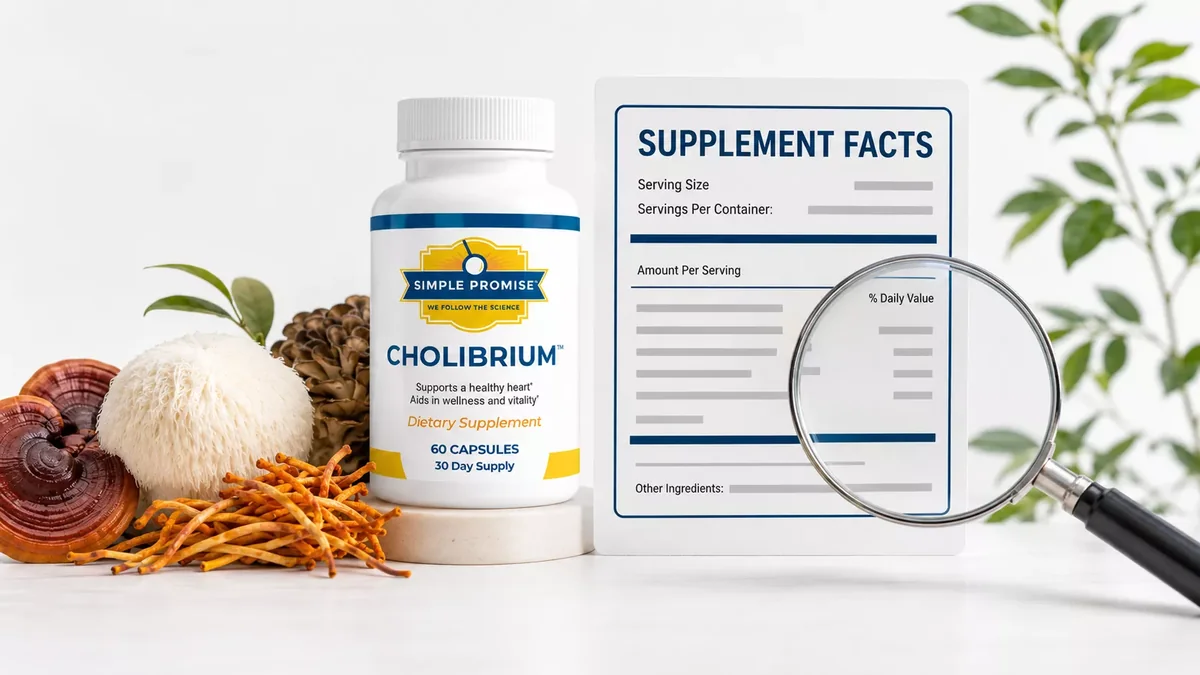
Turn the bottle around and read the Supplement Facts panel. Check serving size, then look for per-ingredient milligrams rather than a single proprietary-blend weight, whether the label names the fruiting body, and whether it states a beta-glucan amount rather than just an extract ratio. Clear disclosure, recognizable fillers and real contact details separate a considered product from a vague one.
Start with serving size
The front of a bottle sells; the back informs. Begin on the back panel, and start with serving size. A label might promise a big total per serving, but if a serving is three capsules and you assumed one, your real daily amount — and daily cost — is a third of what you thought. Check how many servings are in the container, too, since that determines how long a bottle actually lasts.
Find the active ingredients and their amounts
Under the Supplement Facts heading, each ingredient should appear with an amount, usually in milligrams. This is where transparency lives or dies. A well-disclosed product tells you how many milligrams of each mushroom you get. Many blends instead show a single combined weight for a “proprietary blend,” which hides the individual amounts. That practice is legal under U.S. supplement rules, but it prevents you from comparing the product to any dose used in research [1].
Fruiting body or mycelium
Labels should say which part of the fungus is used. The fruiting body is the mushroom cap and stem. Mycelium is the root-like network, often grown on grain and dried with it, which can leave starch in the powder. Neither is worthless, but “fruiting body” usually signals a more concentrated source of the compounds people seek. If a label is vague about the part used, that vagueness is itself information.
Extract ratios and beta-glucan declarations
An extract ratio such as 8:1 means eight units of raw mushroom went into one unit of extract. It sounds precise but tells you nothing about the active compound. A more meaningful line is a stated beta-glucan percentage or amount, because beta-glucan is the soluble fiber with the most cholesterol research behind it — and because some cheaper products report total polysaccharides (which can include grain starch) rather than true beta-glucan [3]. When you see a beta-glucan figure, you’re usually looking at a more serious product.
| Label wording | What it means | What to prefer |
|---|---|---|
| “Proprietary blend 1,000 mg” | Total weight only; per-mushroom amounts hidden | Per-ingredient milligrams |
| “Mushroom mycelium” | Root network, possibly grown on grain | “Fruiting body” stated |
| “10:1 extract” | Concentration ratio; not a compound amount | Beta-glucan % or mg |
| “Polysaccharides 40%” | May include starch, not just beta-glucan | “Beta-glucan” specified |
| “Other ingredients: rice flour” | Fillers or flow agents — normal in small amounts | Short, recognizable list |
Weighing a proprietary blend
A proprietary blend is not automatically a bad product, but it asks you to trust rather than verify. Ingredients on a Supplement Facts panel are listed by weight, so the first-named mushroom is the most abundant — a small clue when amounts are hidden. Still, if the whole formula is one undisclosed number, you cannot know whether the tenth ingredient is a meaningful dose or a pinch. Factor that uncertainty into what you’re willing to pay.
Cholibrium is a fair example to practice on. Its manufacturer names ten mushroom species yet, by its own account, does not publish the individual milligram amounts; you can see how it presents this in the Cholibrium label and ingredient breakdown on its site. Read it the way this guide suggests: named species is a point for transparency, undisclosed amounts a point against. Our ingredients explainer works through the same label in more depth.
Fillers, quality marks and contact details
The “Other ingredients” line lists binders, flow agents and capsule material. A few are normal; a long list of unfamiliar additives is worth a second look. Quality signals include third-party testing or a certificate of analysis, and a manufacturing statement such as cGMP compliance. Remember that cGMP describes how a product is made, not whether it works, and no supplement is FDA-approved for effectiveness [1]. Finally, a legitimate label gives a real company name and a way to make contact.
Limitations of label reading
A label can only tell you so much. It reflects what the manufacturer chooses to disclose and what regulations require, not an independent test of the contents. Even a transparent label doesn’t prove a product produces a health benefit. Reading labels well helps you avoid obviously weak products and spend wisely; it isn’t a substitute for evidence of effect.
What to do next
Next time you’re holding a bottle, run the back panel through the decoder table above before the marketing on the front gets a vote. If you’re comparing several products, our guide to comparing prices, serving costs and guarantees turns those label facts into a true cost per day. And if the whole category is new to you, start with what multi-mushroom supplements are.