Mushroom Guides
Medicinal Mushrooms and Heart Health: What Does the Evidence Show?
The strongest evidence linking a fungi-related compound to cholesterol involves beta-glucan, a soluble fiber — but the best human data come from oats, not mushrooms. Trials of medicinal mushrooms such as reishi have generally not shown meaningful effects on cholesterol, blood pressure or blood sugar. Much remaining research is laboratory or animal work, and no finished multi-mushroom formula has strong human evidence.
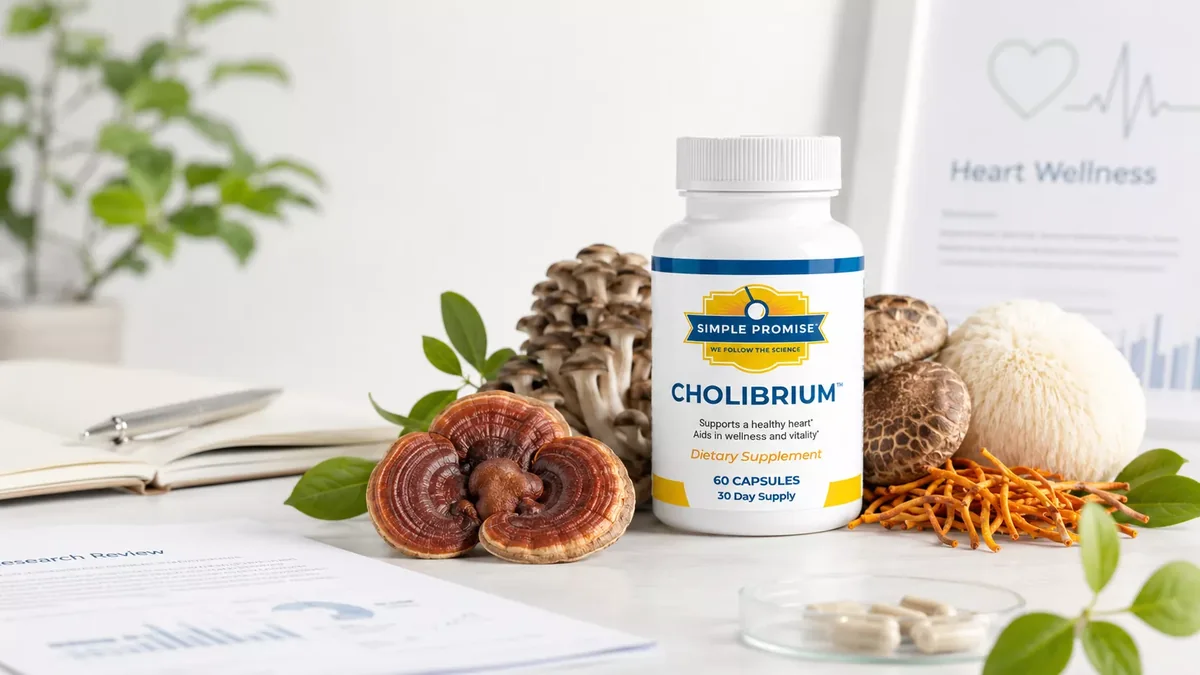
How to weigh mushroom research
Search for medicinal mushrooms and heart health and you’ll find bold headlines. The research underneath them is more cautious, and the gap between the two is where careful reading pays off. Not all evidence carries the same weight, so it helps to picture a ladder.
At the bottom sit test-tube and animal studies. They reveal biological mechanisms and suggest what might be worth testing, but they routinely fail to translate to people. Higher up are observational studies, then small human trials, then randomized controlled trials, and finally systematic reviews that pool many trials. A claim backed by a systematic review of human trials deserves far more confidence than one resting on a mouse study.
| Type of evidence | What it can tell you | Confidence |
|---|---|---|
| Systematic review of RCTs | Pools human trials to find a consistent effect | Highest |
| Randomized controlled trial | Tests a supplement against placebo in people | High |
| Small human study | Hints at effects; often too small to trust alone | Moderate |
| Observational study | Finds associations, not cause and effect | Low–moderate |
| Animal / laboratory | Shows mechanisms; may not apply to humans | Low |
| Manufacturer claim | The seller’s description of a product | Not evidence |
Beta-glucan: the mechanism with real human data
The strongest science connecting fungi-related compounds to cholesterol involves beta-glucan, a soluble fiber. In the gut it forms a gel that binds bile acids, prompting the body to pull cholesterol from the blood to make more — a genuine, measurable effect [3]. Here is the catch for mushroom fans: the human trials that established this used oat and barley beta-glucan, typically several grams a day. Mushrooms contain beta-glucan too, but generally far less, and in different structural forms whose cholesterol effect is not as well demonstrated [4].
So the honest headline is narrow: beta-glucan can nudge cholesterol down, mostly from oats, at doses a capsule rarely provides. That is a long way from “mushrooms lower cholesterol.”
What the research shows, species by species
The mushrooms in heart-marketed blends have been studied unevenly, and mostly for things other than cardiovascular outcomes.
Reishi (Ganoderma lucidum)
Reishi is the most-studied of the group for heart markers, which makes its results telling. A Cochrane systematic review of randomized trials concluded that the available evidence did not support reishi for lowering cholesterol, blood pressure or blood sugar, and the trials were generally small and of limited quality Systematic review [1]. The review also noted mild digestive side effects in some participants.
Cordyceps, shiitake and maitake
Cordyceps appears in small human exercise studies with mixed findings; cardiovascular benefits are not established Small human. Shiitake contains eritadenine, a compound that lowers cholesterol in animal models, but convincing human trials at supplement doses are lacking Animal. Maitake’s glucose and lipid effects likewise come mostly from animal and laboratory work Lab.
Turkey tail, chaga, and the rest
Turkey tail’s human research centers on immune support in cancer care, not the heart. Chaga’s antioxidant activity is largely a laboratory finding, and it carries a kidney-related caution because it is high in oxalates. Across these species, the pattern repeats: interesting mechanisms, thin human cardiovascular evidence.
What this means for a product like Cholibrium
Manufacturers of multi-mushroom blends often assemble these species and describe a list of hoped-for effects. Cholibrium’s maker, for example, publishes a page describing Cholibrium’s proposed product benefits. It is reasonable to read that as the company’s own account of why it chose each ingredient — and important to keep it separate from what independent trials have shown. We found no published human trial of the finished Cholibrium formula.
Findings concerning individual ingredients cannot automatically establish the effectiveness of the complete Cholibrium formula. Product-specific human research would be needed to determine how the finished combination performs. Nothing here should be read as a claim that Cholibrium treats high cholesterol, heart disease or blood pressure.
Limitations of the current evidence
Three honest limits are worth stating plainly. Many promising results come from cells and animals and have not held up in people. Human mushroom trials are often small, short and inconsistently reported, which is exactly why systematic reviews reach cautious conclusions. And blends are essentially untested as blends, because research studies single, measured ingredients, not proprietary mixtures. Absence of proof of benefit is not proof of harm — it simply means the questions remain open.
What to do next
If cardiovascular health is your goal, put your energy first into the things with strong evidence: eating pattern, physical activity, not smoking, and medical care when it’s indicated. Treat a mushroom supplement as an optional extra with uncertain benefit, not as a lever that moves your numbers. Bring any product you’re considering to a pharmacist or doctor, especially if you take medication.
To go further, compare how supplements and prescribed therapy differ in our supplements versus statins article, and see how mushroom blends stack up against other options in multi-mushroom formulas vs omega-3, CoQ10 and plant sterols. For the label side, the Cholibrium ingredients breakdown adds detail.