Supplement Safety
How Long Do Dietary Supplements Take to Work?
It depends on what the supplement is doing. Correcting a deficiency can take weeks to months, judged by a blood test; a fiber effect on cholesterol is dose-dependent; and subjective feelings like energy are hard to attribute and prone to the placebo effect. For cardiovascular goals, a lab measurement is the real judge. There is no established timeline for unproven mushroom-blend claims.
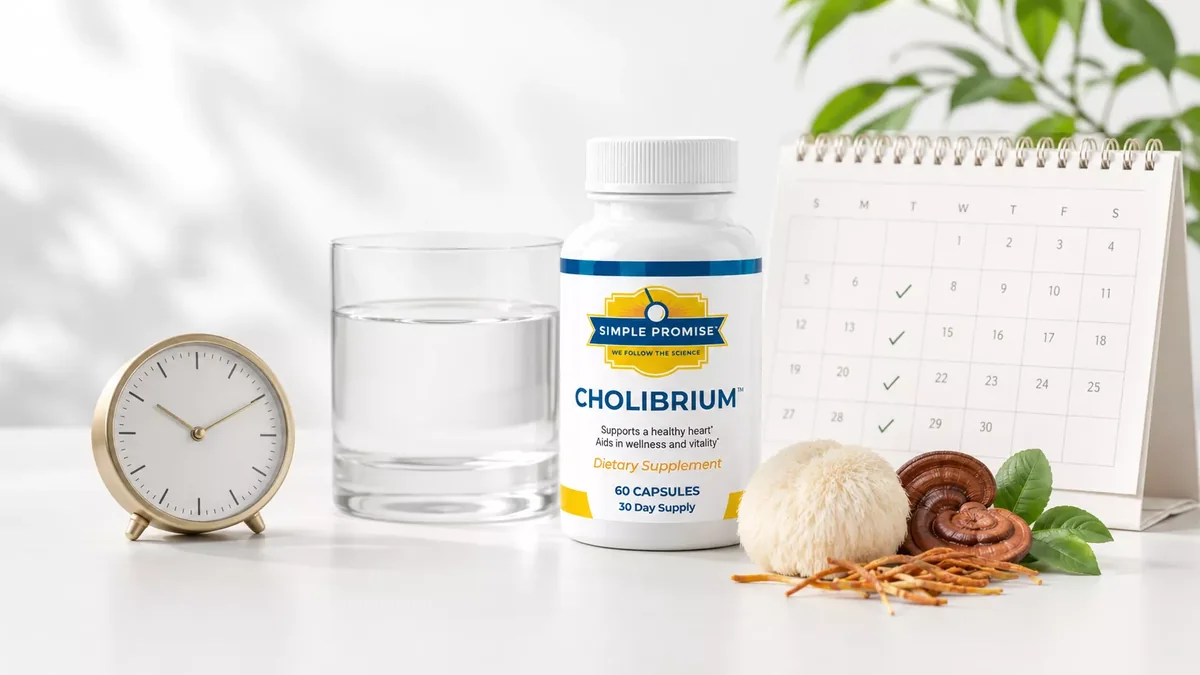
Why timelines vary so much
“How long until I feel something?” is one of the most common supplement questions, and the honest answer is that it depends entirely on what the supplement is doing. Correcting a genuine nutrient deficiency — iron or vitamin D, say — follows the body’s own biology and can take weeks to months, measured by a blood test. A fiber-mediated change in cholesterol depends on daily dose and diet. And a vague sense of “more energy” is subjective and easily shaped by expectation.
So there is no universal countdown. Anyone who promises a fixed number of days to a specific result is guessing, or selling.
Subjective feelings versus measured outcomes
It helps to separate two very different kinds of “working.” One is how you feel — energy, focus, sleep — which is real to you but hard to attribute to a single cause and prone to the placebo effect. The other is a measured outcome, like an LDL cholesterol number from a lab. Feeling better is not proof that a hidden marker has changed, and an unchanged feeling doesn’t always mean nothing happened. For anything cardiovascular, the measured number is what counts, and it comes from testing, not sensation.
| Type of change | How it’s judged | Rough timeframe |
|---|---|---|
| Correcting a deficiency (e.g. vitamin D) | Blood test | Weeks to a few months |
| Fiber effect on cholesterol | Lipid panel | Weeks, dose-dependent |
| Digestive comfort | Your own experience | Days to weeks |
| Subjective energy or focus | Self-report (placebo-prone) | Variable, hard to attribute |
| Most mushroom-blend claims | Not established in trials | Unknown |
What research suggests is realistic
Where supplements have been tested for cholesterol, trials typically run for weeks to a few months before measuring a lipid panel, and even then results are often modest or absent. A widely noted 2023 randomized trial compared several popular supplements with a low-dose statin and a placebo; over the study period, none of the supplements significantly lowered LDL cholesterol compared with placebo, while the statin did [1]. Reishi trials reviewed by Cochrane generally ran about 12 to 16 weeks and did not show meaningful cardiovascular changes [2]. The lesson is patience paired with realistic expectations, and a lab test rather than a feeling as the judge.
Expectation red flags
A few marketing patterns should raise an eyebrow. Promises of dramatic results in a set number of days, before-and-after framing, and language about “feeling it working” all substitute sensation for measurement. So does any claim that a supplement will change a medical number by a specific amount on a specific schedule. Genuine physiological change is usually gradual, variable between people, and confirmed by testing.
Setting expectations for a product like Cholibrium
Because blends are not tested as finished products, there is no evidence-based timeline for a multi-mushroom formula, and we won’t invent one. Manufacturers sometimes discuss expected experiences on their own pages; Cholibrium’s site includes a discussion of Cholibrium evidence and expectations. Read it as the company’s framing, and keep in mind that results cannot be predicted for an individual and that a supplement is not a treatment for a diagnosed condition.
Limitations
Timelines in this article are general categories, not guarantees. Individual biology, diet, dose, product quality and the specific outcome all move the number. And for many supplement claims — including most mushroom-blend claims — there is no established timeframe at all, because the effect itself is unproven. Uncertainty is the honest description.
What to do next
If you try a supplement, decide in advance how you’ll judge it — ideally an objective measure like a lab test at a sensible interval, discussed with your clinician — rather than relying on how you feel. Give it a fair, defined trial, and stop if there’s no benefit. For the underlying research on mushrooms and the heart, see our evidence review; to understand why prescribed therapy is judged differently, read supplements versus statins.